Forest Railways
Unfortunately, information about the forest railways is scarce and by far not as good as with the state railways. Only a few documents have survived from the time before the Second World War, and even after the war, the accounts at the national forestry office were anything but accurate. I got some information (especially about Baxianshan Forest Railway) from the book "Narrow gauge railways of Taiwan" from Michael Reilly (ISBN 978-1-900340-46-5). However, the book describes some forest railways very superficially and in some cases with errors, others are completely missing. I was able to find some information on Chinese and Japanese websites, but unfortunately, I was unable to generate a comprehensive and detailed documentation of the forest railways.
The mountain regions of Taiwan were / are densely forested up to almost 3,000m due to the (sub) tropical climate. In regions of 1,800 meters above sea level also several thousand-year-old cypresses or conifers were growing, whose wood was highly demanded in Japan for the construction of temples, gates and furniture. After the occupation of the island, the Japanese gradually began to exploit these forests, which, however, were mostly located in extremely remote areas. Initially, the trees were brought down into the valleys on improvised slides or with large sleds, where the trunks were then floated on the mountain streams to sawmills in the plains or directly to the coast. The valuable, but quite soft cypress trunks were often severely damaged during the transportation. The construction of forest railways, which emerged on the main Japanese islands at the beginning of the 20th century, increasingly came into focus on Taiwan Island. The first forest railway built on Taiwan Island was the spectacular Alishan Forest Railway, which, with a network of around 150km, was also the longest forest railway in Taiwan. It is by far the best-known forest railway in Taiwan and is still active in tourist traffic today, and it is somewhat atypical compared to the other forest railways in Taiwan. That is why I have devoted a separate site to the Alishan Forest Railway (see menu item Alishan Forest Railway).
 Figure 1: A historical picture of the Luodong Forest Railway. This railway ran in a river valley and connected the Taipingshan Forest Railway, which is located high up in the mountains, to the network of the state railway in Luodong (Yilan Line). The tree trunks were brought from the mountain to the terminus of the Luodong Forest Railway in Tucheng by cable car. After severe damage due to flooding, the railway was closed in 1979 (Unknown photographer, Public domain, via Wikimedia Commons)
The scheme of forest railways other than Alishan Forest Railway was mostly very similar. First, rails were laid along the course of the mountain streams with the 762mm gauge, a gauge that was already used in Taiwan for the sugar railways. The logs felled up in the mountains were brought down to the valley by sledge or slides and then loaded on carts, which were initially pulled by muscle power or water buffalos. From the 1920s onwards, cable cars were built up into the mountains to transport the logs down to the valley. Starting from the cable car stations on top of the mountains, further, mostly relatively flat tracks were laid, which meandered along the mountain slopes and had a gauge of 762mm as well. In some cases, entire systems of cable cars and isolated railway lines with a total length of more than 50 km developed (e.g. Taipingshan Forest Railway). On the tracks in the mountain valleys, steam locomotives gradually replaced the muscle-powered carts. The steam locomotives often came second hand to the forest railways, from either sugar railways or the old Taitung/East Coast Line with 762mm gauge. On the other hand, small locomotives with internal combustion engines were used on the isolated railway lines on the mountain quite from the start. Initially, charcoal gas was mostly used as fuel, which could be obtained directly on the mountain by carbonization of wood; later the locomotives were equipped with gasoline or diesel engines. The railways often emerged as a kind of "public private partnership", i.e. a partnership between the governmental forest departments and private investors. When the Kuomintang came to power after the Second World War and started the nationalization of large parts of the industry, most of the forest railways and forestry operations were taken over by the governmental forest department. The forest department purchased locomotives centrally and distributed them among the different railways without giving any detail in the document. Therefore, the rolling stock of the individual railways is often not known in detail. In some cases, the forest railways were also obliged to offer public transport at least on the valley sections.
 Figure 2: The Alishan Forest Railway is different from all other forest railways in Taiwan. It was the only forest railway on Taiwan Island that overcomes the difference in altitude of more than 2,000m not with cable cars, but with trains in adhesion mode. Shay locomotives were used, such as locomotive 24, which was set up here at the old station in Alishan as a monument locomotive (built in 1913 at LIMA under the factory number 2724). Thanks to numerous tourists, it is the only forest railway in Taiwan left in operation, even though it only transports tourists instead of logs. (Photo by CEphoto, Uwe Aranas)
After the Second World War, most of the forest railways ultimately went to the national forest department. The railways continued to operate and, in some cases, were massively expanded, e.g. new cable cars were built new locomotives were purchased from German manufacturer Schöma. In 1977 there was a government decree that ordered the forest administrations to operate sustainably and emphasized the reforestation and the recreational purpose of the forests. At the same time, the wood supplies were running low, as the mountains had mostly already been cleared over a large area. The last forest railways then ceased operations in the mid / late 1980s. Most of the equipment, rails and locomotives were simply left on top of the mountain, where they are now rotten. In Taipingshan there is / was again a short stretch of the forest railway operational for tourist purposes.
The following table gives an overview of the railways in Taiwan that focused on timber transport. In addition, there were other “push-cart” railways, some of which were also (but not primarily) used for transporting wood. There were five forest railway (systems) on the west coast: Balishan, Baxianshan, Alishan, Luandashan and Linjian; also five on the east coast: Luodong / Taipingshan / Dayuanshan, Lanshan (also known as Arashiyama / Taroko), Muguashan (also known as Harun or Chihnan), Lintianshan (also known as Morisaka) and Chulu:
| Railway | Length(km) | Description | Map (click on map to enlarge) |
| Alishan Forest Railway | ~150 | The Alishan Forest Railway climbs around 2,500 meters in altitude in adhesion mode with a 762mm gauge and line routings! The first sections went into operation in 1912, and in 1915, the main line leading up into the mountains was completed. Up on the mountains was a network of branch lines, the total network had a length of approx. 150km during its heyday. Up to 20 Shay steam locomotives were used until the end of the deforestation in the early 1980s, three of them are still operational today. The line attracted a large number of tourist businesses since the 1960s, which saved at least larger parts from closure. Unfortunately, the lines have been severely damaged by typhoons and earthquakes in recent years, so that trains are currently only running on some sections of the main route, while the long branch lines that once served for wood removal have all been largely closed. Since the Alishan Forest Railway was by far the largest forest railway in Taiwan and it is not comparable to the other forest railway systems in Taiwan, it is presented in a separate site (see menu item Alishan Forest Railway). |  |
| Baxianshan Forest Railway | ~88 | In 1915, timber extraction was started in the mountains northeast of Taichung above the Dajia Valley. In the lower section of the valley, there was a 13.1 km long branch line of the Taichung Light Railway, which was followed from 1926 on by a 45 km long section of a private forest company railway through the upper section of the valley. From there, a combination of cable cars and isolated routes on the mountain (approx. 30 km in length) opened up the woodcutting areas. Only steam locomotives operated on the lower valley section, while in the upper valley section and the mountain routes, only locomotives with internal combustion engines were used. The two private railways were nationalized in 1942, but only merged under the umbrella of the national forest department in 1947. With the construction of a parallel branch line for the state railway in the lower section of the valley, the forest railway in the lower section was shortened in 1956, before it was finally shut down in 1959, as the timber was transported via a road constructed in the meantime. The logging in the area ceased shortly afterwards in 1963. |  |
| Luodong Forest Railway | 36.7 | The Luodong Forest Railway was created in 1924 out of two existing lines (a sugar railway and a railway for the construction of a hydroelectric power station) and a short connection to the sawmill in Zhulin near Luodong, which added up to a total distance of almost 37km. The line ran largely parallel to a mountain river and mainly carried tree trunks that were felled in the mountains of Taipingshan (see Taipingshan Forest Railway). In 1926, public transport opened on the line. After the war, the railway experienced another heyday (1949: 235,000 passengers, 1959: 245,000 tonnes of goods)., before transport figures declined rapidly. With an extension to the state railway station in Luodong and the purchase of a diesel multiple unit from the Alishan Forest Railway, attempts were made to at least stabilize passenger traffic. With little success. After the route was largely destroyed in a typhoon in 1978, passenger traffic also ended in 1979. In addition to the diesel multiple unit, the railway used an illustrious collection of three-axle steam locomotives. Most of the locomotives were preserved, as were some individual station buildings. There are / were plans to (partially) rebuild the line, but so far without any result. |  |
| Taipingshan Forest Railway | ~70 | The Taipingshan Forest Railway on the east coast once had an extensive rail network in 762mm gauge and almost 70km in length as well as several cable cars. It was the second largest forest railway in Taiwan after Alishan. The logging began in 1915, the logs were first transported by slides and sledges and then on streams / rivers. With the opening of the Luodong Forest Railway in 1924, a cable car was built up the mountain from its end point in Tucheng, which was followed by hand-operated routes along the mountain slopes. From 1928, locomotives with internal combustion engines were also used. After the wood supplies ran out, a new camp was built further east in 1935, which was connected to Tucheng by a combination of cable cars and railways. At the top of the mountain, several branch lines followed the mountain slopes to the logging areas. During the war, production declined, but then the network was expanded again and in 1959 almost 100,000m³ of logs were felled. After that peak, however, the numbers fell sharply. In 1973 the neighboring network of the Dayuanshan Forest Railway was connected with the Taipingshan Forest Railway. However, the railway operation ended soon afterwards in 1979, when a road had been constructed and logging in the area was finally given up in 1982. | |
| Dayuanshan Forest Railway | ~45 | The Dayuanshan Forest Railway was situated directly northeast of the Taipingshan Forest Railway. It also consisted of a combination of railway lines and cable cars. At the foot of the mountain, there was probably a “push-cart” line as far as Luodong. I could not find anything about the history of the railway or the locomotives used. Large parts of the wood stocks were cut down in the early 1970s and large part of the route network and cable cars were closed. A remaining section (Qingfeng Line) was connected to the Taipingshan Forest Railway in 1973, which then took over operations of the Dayuanshan Forest Railway. Latest by the end of rail operations in Taipingshan in 1979, rail operations also ceased here. | |
| Lanshan Forest Railway | ~45 | In 1943, the Lampang Forestry Corporation built a first 6km long railway line towards the mountains west of Hualien to exploit the forests there. After the war, the line and logging operations were taken over by the national forest department, which massively expanded the network. Between 1951 and 1960, three lines with a total length of around 45 km and three cable cars with a total length of 4.56 km were built, the highest point of the system was around 2,000 m above sea level. The valley line was initially connected to the railway network of the Hualien sugar factory, later it was connected directly to the state railway line. At the end of the 1970s, the volume fell sharply and operations of railways and logging business finally closed latest by 1989. |  |
| Muguashan Forest Railway | 49.51 | In 1930, the Hualien Port Timber Co., Ltd. was founded to exploit the forests in the mountains southeast of Hualien. For this purpose, a first railway line was constructed from the East Coast/Taitung Line to the foot of the mountain, where several cable cars ended. After the Second World War, the business went to the national forest department, which expanded the operations massively. By 1965, the railway network had reached a length of 49.51 km, plus five cable cars with a total length of 4.7km; the highest point of the network was around 2,400 m above sea level! From 1977 on, the volume fell sharply, before the operation was finally shut down in 1989 (the railway was the last operational forest railway in Taiwan). Most of the tracks are still in place, but nature has completely reclaimed the area. There are now plans to build a tourist cable car, some of which will run along the former routes and cable cars. Steam locomotives were used on the connecting line to the state railway, small locomotives from Kato with diesel or gasoline engines were in use on the isolated mountain lines and in 1972, a few locomotives from German manufacturer Schöma were added. |  |
| Lintianshan Forest Railway | ~32/28 | As early as 1918, the Hualien Port Development Co. built a 32 km long branch line with a 762 mm gauge into the Lintianshan River Valley in order to transport the tree trunks felled on top of the mountains. The operation was probably carried out entirely by hand. In 1934, operations ceased for whatever reason. The remains of the railway and the license for logging were taken over by a paper mill in 1939, which did not reactivate the old line, but built a new, 3 km long branch line from the governmental East Coast/Taitung Line to Lintianshan. This was followed by a well-known system of cable cars and isolated railway lines, which at the time of its bloom had a length of around 25 km. After the war, the railway finally went from the nationalized paper mill to the national forest department. Between 1961 and 1971 the route network was massively expanded again, the highest point in the railway system was at 2,600m, making the Liantianshan Forest Railway the highest forest railway in Taiwan together with the Alishan Forest Railway. In contrast to the Alishan Forest Railway, the 2,600m difference in altitude were not climbed by rail, but largely by cable cars. Railway operations were largely discontinued in 1979, and logging was finally given up in 1987. | Unfortunately no map so far :-( |
| Balishan Forest Railway (Miaoli County) | ? | I could not find any details on this railway. Most probably it was only a push-cart line focussing on transportation of logs. | Unfortunately no map so far :-( |
| Luandashan Light Railway (Nantou County) | ? | I could not find any details on this railway. As the name "light railway" suggests, it was most probably only a push-cart line focussing on transportation of logs. | Unfortunately no map so far :-( |
| Linjian Light Railway (Nantou County) | ? | I could not find any details on this railway. As the name "light railway" suggests, it was most probably only a push-cart line focussing on transportation of logs. | Unfortunately no map so far :-( |
| Chulu Railway (Taitung County) | ? | I could not find any details on this railway. Most probably it was only a push-cart line focussing on transportation of logs. | Unfortunately no map so far :-( |
Further details on some of the railways listed in the table above can be found below. Please click on the headlines or arrwos to expand the area.
Baxianshan Forest Railway
The Japanese occupiers discovered large deposits of red cypresses in the mountains northeast of Taichung, which were not as extensive as in Alishan, but of better quality. In addition, there were large deposits of other trees, which could be used for construction, firewood as well as charcoal production. Taichung was already one of the largest cities in Taiwan at the beginning of the occupation and therefore the area around Baxianshan, which was accessible via an approx. 60 km long valley (Dajia River), was not as remote as the other forest areas in which the Japanese later opened forest railways. The forestry operations and the forest railway network were privately owned until the Second World War, so there are hardly any records left from this time and some of the history of the railway still lies in the dark.
The logging in Baxianshan probably began in 1915 at the latest, the transport was carried out as usual initially by slide, sledge and mountain river. At around the same time, the Taichung Light Railway Company was founded in 1913, which set up a 100km long network of “push-cart” railways in ~ 545mm gauge around Taichung (such railways were very common in Taiwan, for more information on “push-cart” railways, please click on the menu item in the menu bar above). This company also built an approx. 13 km long branch line from Fengyuan station on the state railway (Taichung or Mountain Line, see menu item Lines –> Main Lines) with a 762 mm track width into the lower and still quite wide and flat section of the Dajia valley. Therefore, the line that ran along the left side of the valley only had a maximum gradient of 1.6% and a minimum radius of 200m. The exact opening date is unknown, as is whether the line was operated with locomotives from the start or initially by hand just as the company's other lines. The different choice of track gauge as well as the laid rails with 12kg / m at least suggest that operation with locomotives was at least planned relatively soon after the opening. Another source says that the line was initially built in ~ 545mm gauge and was re-gauge to 762mm in 1924.
The railway line did not primarily focus on transporting wood, but mainly served passenger transport (especially visitors to the hot springs that existed in the valley) as well as the transport of agricultural goods in the lower section of the valley, which was already quite densely populated at that time. On the 11.7km long section from Fengyuan to Tuniu there was heavy traffic (55,000t of goods and 580,000 passengers in 1950!), In Tuniu there was a manually operated route across the river to Dongshi, the main town of the valley with many hot springs. The 1.4 km long remaining section to Zhumuchang ("wood storage area") was mainly used for wood transport. This is illustrated by the fact that there were 14 pairs of trains between Fengyuan and Tuniu in 1939 (39 to 43 minutes travel time), but only one and a half of them were running to Zhumuchang, where the railway's workshop was located.
A private company, but not the Taichung Light Railway also handled the logging. In the beginning, however, there were always attacks by natives, and the wood was repeatedly severely damaged during transport on the mountain stream to Zhumuchang. Thus, a “push-cart” line through the Dajia Valley from Tuniu to Jiuliangqi at the foot of the Baxian (“Eight Immortals”) Mountains was built relatively quickly (probably in 1917). The local administration of the forest company was located in Jiuliangqi; it later developed into the operational centre of the forest railway. Latest by 1927, a “real” railway line was laid through the valley, which then connected to the Taichung Light Railway (TLR) in Zhumuchang and no longer in Tuniu. Nevertheless, the route initially followed the TLR 1.5 km to Tuniu, where there was a hairpin without any operational necessity, until the railway led back towards the end of the valley. The valley section of the forest railway had a total length of approx. 45 km, gradients of up to 4.1% and a minimum radius of 20 m (!), Rails with 9 kg / m were used. Behind Jiuliangqi, the train led about 1.5 km to the foot of the steep mountains. A 1.15km long cable car then led up to the mountain, followed by a short section of track and another 1.28km long cable car. Another 16km long route followed there, as well as another 500m long cable car and finally another 14km long route on the mountain. The total network without the TLR had a length of around 75km! The isolated stretches on the mountain were equipped with very light rails (6kg / m), a minimum radius of 20m and many trestle bridges.
 Figure 3: For a long time, the Baxianshan Forest Railway consisted of two separate lines. The "Taichung Light Railway" (TLR) operated a line from Fengyuan to Zhumuchang (marked in blue). The state railway line to Dongshi (marked in black) was only opened in 1956 and took over lower the section from Fengyuan to Meitsi and re-gauged it to 1,067mm. Only three years later, operations ended on the remaining section from Meitsi to Zhumuchang. In Zhumuchang, the valley section of the forest railway (marked in pink) connected to the TLT. The forest railway led through the increasingly narrowing valley to Jiuliangqi. There cable cars (marked orange) led up the mountain, where there were further lines and a another cable car.
On the valley section of the forest railway there was only one daily pair of passenger trains with a small combustion engine, which with a travel time of 3h40min for 45km was almost exclusively aimed at the forest workers. With the construction of the railway line, the volume of wood extracted from Baxianshan increased massively. From 836m³ in 1915, it surged to 15,000m³ in 1927, the high point was reached in 1943 with 43,790m³. In the 1920s, some hydropower plants and water collection instalments to irrigate the sugar cane fields in the lowlands around Taichung were built in the Dajia Valley in the river valley, and the railway was probably also used for transport during the construction works. In Xinshan, around 1km up the valley from Jiuliangqi, a cable car with an imposing wooden viaduct was built up into the mountains in 1938. However, it was destroyed in a forest fire after ten years in operation and was never rebuilt. The forest company established large tree nurseries between Tuniu and Zhumuchang, which were served by an extensive network of “push-cart” lines.
Until the Second World War, there were two separate railways in the valley with different private owners and interests. It was not until 1942 that both railways were taken over by the government, mostly for strategic reasons. The Taichung Light Railway, however, went to the national transport authority, whereas the forest railway including its valley section went to the national forest department. Only in 1947, the national forest department also took over the lower section of the valley railway. After the war, operations continued as before, only the wooden trains could now run through directly to the state railway in Fengyuan without a handover in Zhumuchang from one company to the other. In terms of passenger traffic, however, the 14 pairs of trains to Tuniu remained, although more pairs of trains were extended to Zhumuchang, as the population density in the middle section of the valley also increased due to the mass exodus of the Kuomintang and their supporters from the mainland to Taiwan. At the same time, not all trains ran through to Fengyuan, but rather ended in Puzi approx. 3.7 km before Fengyuan. Puzi was the terminus of a sugar railway with a direct connection to Taichung, the destination of most of the passengers from the valley.
In order to better connect the isolated east coast of the island to the densely populated west coast, the government decided in the early 1950s to build a road from Taichung over the high mountain ranges to Hualien (today's state road No. 8) after the construction of a railway line was considered too expensive (see menu item Lines -> Planned Lines). For road construction and the construction of further dams and hydropower plants in the mountains, the state railway laid a new branch line in 1,067mm from Fengyuan to Dongshi in 1956, which in the lower section partially used the line bedding the 762mm railway (see Dongshi Line iunder menu item Lines -> Branch Lines). Meitsi was therefore the new transfer point between the762mm forest railway and the 1,067mm state railway. Due to the construction of the road in the mountains, the felled wood could now be transported directly by truck and the entire forest railway including the lower Meitsi - Zhumuchang valley section ceased operations in 1959. Anyway, in 1963 complete logging ended, making Baxianshan the first large forest operations in Taiwan to cease operations. The branch line of the state railway to Dongshi did not survive for long either; it was closed in 1991 and converted into a cycle path. Remnants of the forest railway have nearly disappeared completely more than 50 years after its closure. Only in Tuniu, a small park with some information boards located at the former train station reminds of the once so important forest railway line in the Dajia Valley.
Even less clear than the history of the forest railway (until 1947 rather two railways) is the information of the locomotives that were used on the railways. Two locomotives from the early days of the Taichung Light Railway were recorded: most probably a 13t 0-6-0T from Nippon Sharyo (serial number 141, built in 1925), which was directly delivered to the railway. In addition, a 13t heavy, 70PS strong 0-6-0T from O&K (serial number 10851) which was taken over as a used engine from one of the sugar railway was most likely used. Reports from the following years mention a total of three steam locomotives without describing them in more detail (possibly also O&K locomotives with the wheel arrangement 0-6-0T and serial numbers 10876 and 10877, which came used from the Ryobi Light Railway in Japan or maybe some locomotives from Nippon Sharyo). Looking at the transportation figures, the total number of three steam locomotives seems far too low, especially since there are no railcars recorded for the TLR. Probably more used locomotives were purchased or borrowed from the many sugar railways on Taiwan Island. In Puzi, the TLR had a direct connection to the sugar railway of the Taichung sugar factory. The sugar factories only needed large parts of their locomotive stock during the harvest season and maybe passed some of the locomotives to the TLR during non-harvest times. After the war, some sources record up to five steam locomotives (also without further details). Various sources say that a part of the remaining steam locomotives probably went to the Luodong Forest Railway on the east coast after the end of service on the Baxianshan Forest Railway in 1959.
Steam locomotives most probably never ran on the forest railway’s valley section from Zhumuchang to Jiuliangqi. Pictures from the opening year 1926 only combustion engines. The forest railway had a total number of 25 locomotives from Plymouth, including 11 with 7 tons and 46hp power, which could only be used on the valley route around Jiuliangqi (they were too heavy for the cable car to be transported up the mountain). The remaining 14 locomotives weighed 4 tons, had 30hp and were probably only used on isolated mountain routes. In addition, there were probably three larger 15ton diesel locomotives with two axles and a jackshaft drive (further details not known). A draisine with a combustion engine was probably sufficient for passenger transport. In October 1951, the national forest department ordered 18 combustion locomotives (15 with 7tons each, 3 with 4.5t each) from Kato, of which one or the other might also have been sent to Baxianshan (the allocation of the locomotives to the individual Forest railways is unfortunately not recorded).
In the mountains of Taipingshan, southeast of Luodong near Yilan, the Japanes occupiers discovered abundant amounts of large trees. Latest by 1915, they started to exploit the wood deposits. As for most of the other forest companies, the logs were initially brought down into the valley with slides or sledges. From there, the felled trees were transported by rafting on the Lanyang mountain river to the coast at Luodong. This was very inefficient and the valuable wood was often severely damaged. To make matters worse, the Taiwan Electric Co., Ltd. planned the construction of several dams and power stations that withdrew so much water from the Lanyang River that rafting would no longer be possible. For the construction between 1918 and 1921, the electricity company built a 19.36km long 762mm line from Tiansongpi to Tucheng. In Tiansongpi there was a connection to the sugar railway of the Tainan Sugar Company, which in turn had a connection to the Yilan Line of the state railway from 1919 on. The forest company was now under pressure to act. It built a sawmill in Zhulin north of the Luodong state railway station, including an artificial lake for storing the logs, and connected the sawmill to the Weiziwai train station on the sugar railway. The sawmill was in turn connected to Luodong station via a cape gauge siding. In addition, the company took over the Waiziwai - Tiansongpi section from the sugar railway as well as the Tiansongpi - Tucheng section from the electricity company and built a small depot with a locomotive shed next to the sawmill. On January 27, 1924, the Luodong Forest Railway then started operations from Zhuli to Tucheng, and the Taipingshan Forest Railway with several cable cars and railway lines connected at the terminus of the Luodong Forest Railway in Tuchang.
| From | To | Length (km) | Opening | Remark |
| Luodong | Zhuli | 0.6 | 1923/24 and 1970 | Initially, the sawmill and depot at Zhuli was connected to the state railway (Yilan Line) at Luaodong station with a siding in 1,067mm gauge. Transfer passengers had to walk from Luodong to Zhuli. To boost passenger transport and cover decreasing log transports, the siding was re-gauged to 762mm and passenger trains of the Luodong Forest Railway now started/ended at Luodong station. |
| Zhuli | Waiziwai | 3.07 | 27.01.1924 | This missing link connected the sawmill at Zhuli with the network of the sugar railway. |
| Waiziwai | Tiansongpi | 14.52 | unknown | This section was initially opened by the Tainan Sugar Factory (opening date unknown). In 1924, it was taken over by the Luodong Forest Railway. |
| Tiansongpi | Tucheng | 19.36 | 1918/21 | Initially constructed by the Taiwan Electric Industrial Co., Ltd. as a "push-cart" railway for the construction of dams and power stations. In 1924, it was taken over by the Luodong Forest Railway. |
| 36.7 |
The 36.7 km long line runs largely parallel to the Lanyang River, in the lower section partly also in the extensive river bed of the river itself on trestle bridges. This has been a problem for the railway throughout its whole life, as the river swells very strongly during the typhoon seasons and damaged the line every year. In the upper section, steep mountain slopes come right up to the river. There were a total number of 138 bridges on the route (of which 22 were larger, mostly trestle bridges, some of which were up to 600m in length), ten stations and seven tunnels; the maximum gradient was 2.5%.
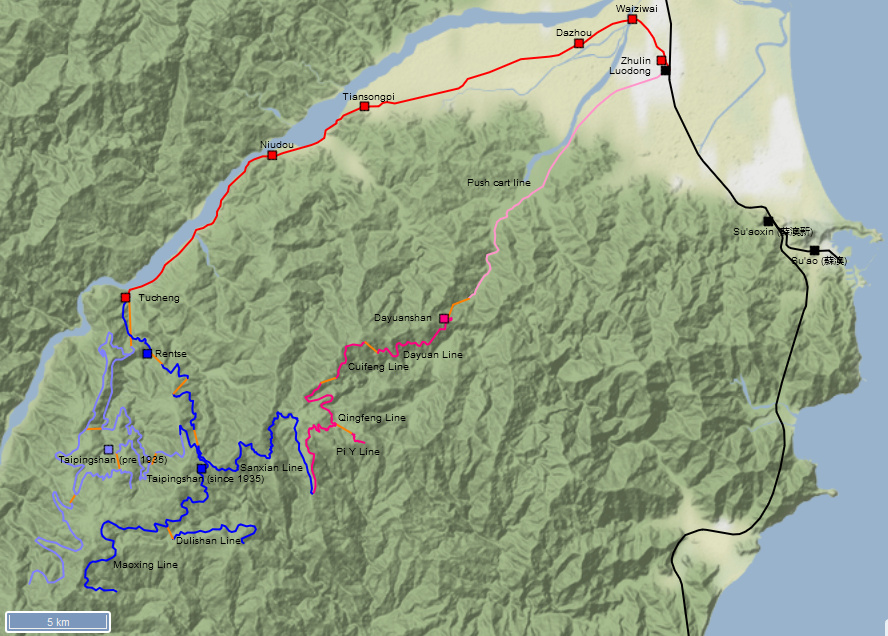 Figure 4: This map shows the forest railways of Luodong (red), Taipingshan (light blue until 1935, dark blue from 1935) and Dayuanshan (pink or light pink for manually operated connecting lines in the valley). The cable car sections are each marked orange. The coastal line of the state railway is marked in black. The Luodong Forest Railway had its starting point at the state train station in Luodong and ran largely parallel to the Lanyang River to Tucheng, where the lines and cable cars of the Taipingshan Forest Railway connected.
The railway was initially limited to transportation of logs. On May 18, 1926, public passenger transport was started. Passenger trains were used by the local population, but also increasingly by tourists. Initially, there were three mixed trains per day and direction with a travel time of 2.5 hours. Logs were transported on separate trains without (official) passenger transport. In 1926, 22,800m³ of wood was transported, a year later it was already over 35,000m³ and figures were rising from year to year until1943, when a preliminary record with 82,142m³ was reached. After the war, the figures fell sharply at first (1946: 12,500m³) before they reached new record numbers, the absolute high point was recorded in 1959 with 93,000m³. In addition, the railway transported all the material for the forest railways in Taipingshan, thus the overall volume of goods including wood was 243,000 t! With the millions of supporters of the Kuomintang who fled the mainland to Taiwan after the war and often settled on the still sparsely populated east coast, the number of passengers also rose. The record was in 1949 with 235,000 passengers; in the 1950s, more than 150,000 passengers still used the railway per year, and there were 6-7 trains every day. For a 762mm narrow-gauge railway, which was operated exclusively with small, three-axle tank locomotives, this was an enormous amount.
 Figure 5: The station building of the former Tiansongpi station has been preserved (Maddoxwei at zh.wikipedia, CC BY-SA 3.0 [creativecommons.org], via Wikimedia Commons).
 Figure 6: This tunnel of the Luodong Forest Railway has also been preserved (賴亮名, CC BY-SA 4.0 [creativecommons.org], via Wikimedia Commons).
 Figure 7: A train of the Luodong Forest Railway loaded with wood on one of the typical trestle bridges in the wide river bed (Unknown photographer / Public domain in Wikimedia Commons).
 Figure 8: A train of the Luodong Forest Railway alongside the newly constructed road that ultimately led to the railway's closure (Unknown photographer / Public domain in Wikimedia Commons).
However, the high transport volume did not last long. From the early 1960s, logging fell sharply, since large parts of the mountains around Taipingshan were now almost completely deforested. The remaining logs were increasingly transported away by truck on the newly built roads. The Luodong Forest Railway, like the Alishan Forest Railway, therefore tried to concentrate on passenger transport and had particular tourists in its focus. For this purpose, the 762mm route from Zhulin to the state railway station in Luodong was extended so that passengers could change trains directly and did not have to walk from Luodong to Zhulin. In addition, a diesel railcar was taken over from the Alishan Forest Railway in order to massively reduce the travel time compared to the previously steam hauled goods train with attached passenger coaches. However, this could not save the railway from its closure. After 1976 the log transport on the railway tended towards zero and the route along the mountain river was repeatedly damaged by floods (most recently in 1978 large parts of the route were washed away after a typhoon). Thus, the remaining passenger traffic was stopped on August 1, 1979.
 Figure 9: With the help of this diesel railcar, which was purchased used from the Alishan Forest Railway, another attempt was made in the early 1970s to revitalize passenger traffic on the Luodong Forest Railway. Without success, in 1979 the line was closed. The railcar survived and now stands as a memorial at the former terminus in Tucheng (Water, CC BY-SA 3.0 [creativecommons.org], via Wikimedia Commons).
If the line had survived another ten years, it might have been Taiwan's second major railway attraction alongside the Alishan Forest Railway. Some tunnels and parts of the track bed outside of Luodong were preserved. In Luodong, a park was laid out on the site of the former railway station and sawmill, in which five former steam locomotives are put on display. Another steam locomotive and the diesel railcar with a trailer that was used in the 1970s are also on display in Tucheng. The railway station buildings of Dazhou, Tiansongpi and Tucheng also survived, as well as a turntable and a water tower in Tiansongpi. A few years ago, there was a plan to rebuild a 3.9 km long section around the former Tiansongpi station and to operate tourist traffic there. If tourist traffic were successful, the route would have even be reactivated in its entire length (which is probably more of a pipe dream). Apparently, the project has fallen asleep; at least I could not find any more current information about it on the net.
While the history of the railway line is fairly well known, there are many gaps, ambiguities and inconsistencies when it comes to the steam locomotives used by the railway. Here I repeat Michael Reilly's assumption from his book "Narrow gauge railways of Taiwan". The locomotives from the early days until the opening of the complete railway line in 1924 are relatively secure. Probably in 1923 or 1924 three tank locomotives with the wheel arrangement 0-6-0T and a weight of 15t were ordered from Nippon Sharyo and delivered (factory numbers 99 - 101, classified at the Luodong Forest Railway under the numbers 1 - 3). One was probably damaged so badly in an accident relatively soon after it was purchased that it probably had to be scrapped. It is questionable whether the railway was able to handle the extensive traffic with only two locomotives. However, new locomotives are only recorded for 1933, when plans were made to expand logging in Taipingshan. Those were two used tank locomotives in the 0-6-0T wheel arrangement purchased from the Alishan Forest Railway: one Andrew Barclay (year of construction 1911, serial number 1251, classified as No. 5) and one with a 20t heavy Kawasaki (year of construction 1914, serial number 126, classified as No. 6). Locomotive numbers 4 and most probably 10 were not used because the Chinese pronunciation of the numerals "four" and "ten" is similar to the pronunciation of the word "death". Therefore, it is still possible that the railway operated with only two or three locomotives until 1933. If necessary, locomotives were also borrowed from the sugar cane railways around Luodong which connected to the Luodong Forest Railway. The sugar railways locomotives were only fully utilized during harvest time, the rest of the time they were mostly idle. Perhaps they helped on the forest railway during this time, because the logs could be temporarily stored in a water basin in Tucheng. During the war, the railway then received two brand new, 13t or 15t heavy 0-6-0T from Kawasaki in 1941 (factory numbers 2544 and 2545), which were classified as No. 8 and 9. A locomotive number seven is not recorded.
 Figure 10: The Kawasaki locomotive no. 8 (built in 1941, factory number 2544) are put on display in a park on the former site of the Zhulin train station and sawmill. This is how log trains on the Luodong Forest Railway typically looked like (chia ying yang, CC BY 2.0 [creativecommons.org], via Wikimedia Commons).
When logging increased massively after the war, another five steam locomotives came to the Luodong Forest Railway. There are various theories: Taichung Light Railway locomotives (see Baxianshan Forest Railway), Alishan Railway locomotives, decommissioned locomotives from the state Taitung/East Coast Line or from sugar cane railways, new builts from Taiwan Machinery Corp.... . The only thing that is certain is that they were numbered as nos. 11 – 15. Michael Reilly suspects that no. 11 is a new built by Taiwan Machinery Corp. from 1948, no. 12 and 13 are Nippon Sharyo locomotives that came to Luodong between 1948 and 1951 (including at least one of the Taichung Light Railway), No. 14 was the second Andrew Barclay locomotive from the Alishan Forest Railway which came to Luodong in 1951. No. 15 is possibly another Nippon Sharyo loco, which may have come used from a sugar railway that received large shipments of new tank locos from Belgium in 1948. In 1971, a diesel railcar and two matching passenger trailers were purchased from the Alishan Forest Railway for passenger transport. In the last years of operation of the railway, the locomotives nos. 2, 8, 9, 11, 12 and 15 were still used. In and around Luodong, seven steam locomotives are set up on display. However, it is doubtful whether they are all Luodong Forest Railway locomotives, even if the information boards say so.
| Nos. | Type | Manufacturer | Manufacturing nos. | Year built | Used in Luodong since | Remark |
| 1-3 | 0-6-0T | Nippon Sharyo | 99 - 101 | 1923/24 | 1924 | 15t, one scrapped very early after accident; no.1 (?) put on display in Tuchang, no.2 (?) put on display in Luodong |
| 5 | 0-6-0T | Andrew Barclay | 1251 | 1911 | 1933 | 15t, ex. Alishan Forest Railway No.1 |
| 6 | 0-6-0T | Kawasaki | 126 | 1914 | 1933 | 21t, ex. Alishan Forest Railway |
| 8-9 | 0-6-0T | Kawasaki | 2544-2545 | 1941 | 1941 | 13t or 15t; both on display at Luodong Forestry Conservation Park |
| 11 | 0-6-0T | Taiwan Machinery Corp.? | ? | 1948? | 1948? | on display at Luodong Forestry Conservation Park |
| 12-13 | 0-6-0T | Nippon Sharyo | ? | ? | 1948/1951? | at least one ex. Taichung Light Railway?; no. 12 on display at Luodong Forestry Conservation Park, no. 13 on display at Chihn-an Forest Park (wrongly marked as an Andrew Barclay locomotive)? |
| 14 | 0-6-0T | Andrew Barclay? | 1252? | 1911? | 1951? | 15t, ex. Alishan Forest Railway no.2? |
| 15 | 0-6-0T | Nippon Sharyo | ? | ? | 1951? | taken over from a sugar railway? on display at Luodong Forestry Conservation Park |
Here is another interesting link to a Japanese site with historical pictures, maps and a search for traces of the Luodong and Taipingshan Forest Railways. Click the button on the bottom right to continue
The Taipingshan Forest Railway was the second largest forest railway in Taiwan after the Alishan Forest Railway and it was the first to introduce a combined system of railway lines and ropeways, which was then used on almost all other forest railways in Taiwan. At peak times, the network consisted of railway lines and ropeways with a total length of more than 70 km (see map below); more than a dozen small combustion locomotives were in use.
In 1914, the Japanese discovered particularly old and valuable cypresses around Taipingshan with a wood quality even better than in the already developed area around Alishan. Logging began immediately and by 1915, around 9,000m³ of wood had already been brought down to the valley. The (old) logging camp of Taipingshan was built at the end of a valley at an altitude of approx. 1,400m. The felled logs from the surrounding mountains were brought here on slides or sledges. As soon as the mountain stream had enough water, the logs were floated to Tucheng, where they could then be transported further down the Lanyang River to Luodong. With the opening of the Luodong Forest Railway (see below) in 1924, the logs were transported from Tucheng to Luodong by rail. In the same year, the first cable car was built from Tucheng up to the mountains, from where tracks ran along the mountain slopes. The wagons on the mountain lines were initially pushed by humans or pulled by water buffaloes. The ropeway was the first one of its kind to be used in a forestry enterprise in Taiwan and quickly spread to other forestry enterprises in Taiwan. In 1920, 19,345m³ of trunk wood could be produced, in 1926 22,800m³ and in 1927 35,000m³. From 1928 on, the first Plymouth combustion locomotives (probably still powered by charcoal gas) were used on the network. Despite the continued expansion of the network to the south, the stocks of wood continued to run out. However, in the mountains east of the old camp, there were still large deposits that would have been very difficult to connect to the old network by rail.
In 1935, a new, large logging camp (including a school!) were set up on the east side of Taipingshan. It was connected to Tucheng station of the Luodong Forest Railway by a combination of three ropeways and four isolated lines. The ropeways not only allowed the transport of logs, instead the wagons could be attached together with the logs and the cumbersome reloading was no longer necessary. There were also cabins for passenger transport, which were used according to a fixed timetable. Thanks to the payload of 5t, the light combustion locomotives could also be transported without having to dismantle them into individual parts. The combination of ropeways and railway lines up to the mountain was called the Taipingshan Line, it was 16.25 km long and climbed around 1,250 meters in height. Starting from Taipingshan, there were then two long branch lines: the Sanxian Line to the east and the Maoxing Line to the southwest with probably another, isolated line that was also connected via a ropeway. In addition, parts of the old network were probably connected to the new network via the Jianqing Line. However, other parts of the old network and the old ropeway to Tucheng were abandoned (see map below).
| Line | Length (km) | Max. gradient | Min. radius | # Bridges | # Tunnels | Remark |
| Taipingshan | 16,25 | 3,0% | 15 | 155 (total length > 3,800m) | 3 (total length 109m) |
The route started with a loop in Tucheng and ended at Taipingshan logging camp on top of the mountain. It consisted of four railway line sections and three ropeway sections:
|
| Sanxian (Samsung) | 15,30 | 2,5% | 15 | 168 | - | The line ran along the mountain slopes east of Taipingshan. In 1973, it was extended to the Qingfeng Line of the Dayuanshan Forest Railway to connect it to the Taipingshan Forest Railway network. |
| Maoxing | 20,90 | 2,5% | ? | 303 | - | This line ran along the slopes southwest of Taipingshan. After about a third, the Dulishan Line connected via ropeway. |
| Jianqing | 5,60 | 2,5% | 15 | 42 | - | This line probably connected the new camp in Taipingshan with the easternmost point of the old network. |
| Dulishan | 15,50 | 2,5% | ? | 115 | - | The isolated Dulishan Line connected to the Maoxing Line via ropeway. In addition to the Dulishan Line, there were also two branch lines, of which the layout is unknown to me:
|
Figure 11: This map shows the forest railways of Luodong (red), Taipingshan (light blue until 1935, dark blue from 1935) and Dayuanshan (pink or light pink for manually operated connecting lines in the valley). The cable car sections are each marked orange. The coastal line of the state railway is marked in black. The Luodong Forest Railway had its starting point at the state train station in Luodong and ran largely parallel to the Lanyang River to Tucheng, where the lines and cable cars of the Taipingshan Forest Railway connected.
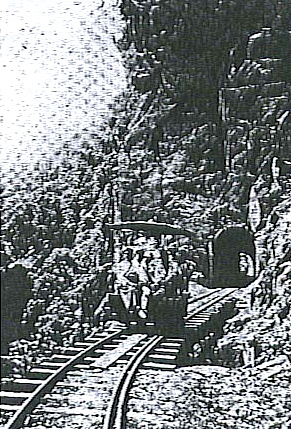 Figure 12: A historic photograph of the Taipingshan Forest Railway.
 Figure 13: This photograph from 1970 shows the first ropeway section of the Taipingshan Line. Behind the river bend in the river, not visible in the picture, is Tucheng Station, the starting point of the Taipingshan Forest Railway and the terminus of the Luodong Forest Railway (source: [blog.xuite.net]).
The railway reached its first peak in 1943, when 82,142m³ of logs were transported. Due to the war, numbers fell sharply to only 12,500m³ in 1946. However, wood continued to play an important role as an important export good and thus the network was expanded again and new locomotives were procured. In 1959, the absolute peak was finally reached with 93,000m³ of transported logs.
After that, however, there was a steady decline, at the end of the 1960s the transported logs halved to only approx. 40,000m³. In the late 1970s, a road was built to Taipingshan, and the Taipingshan Line with its combination of cable cars and railways was closed. In 1973, parts of the network (Qingfeng Line) of the neighboring Dayuanshan Forest Railway (see below) were connected to the Taipingshan Forest Railway. The Dayuanshan Forest Railway handed over their operations to the Taipingshan Forest Railway and closed large other parts of their network. In 1982, the timber production around Taipingshan officially ended, the railway operations had probably ceased already in 1979. The lines were not dismantled, but left to decay. The area around Taipingshan has been turned into a recreation area for tourism. A 3.2 km long section of the former Maoxing Line was reactivated for tourist traffic in 1991, but the line went out of service again in 2012 after various typhoons and earthquakes has seriously damaged the line. Since 2018, there will probably be operation again on a shorter section. Hiking trails have been laid along various other sections of the route, where remains of the lines and bridges can still be seen.
 Figure 14: The forest railways were often active until the 1980s and were not dismantled after their closure. Relics can still be found in the forests, this picture shows a wooden bridge of the Taipingshan Forest Railway (Yc9660316, CC BY-SA 4.0 [creativecommons.org], via Wikimedia Commons).
 Figure 15: Hiking trails have been created along some former lines of the Taipingshan Forest Railway (童胖胖薇琪, CC BY 3.0 [creativecommons.org], via Wikimedia Commons).
 Figure 16: Tourist traffic is back on a short stretch of the former extense railway network of the Taipingshan Forest Railway today (*嘟*, CC BY 2.0 [creativecommons.org], via Wikimedia Commons).
At least 15 small locomotives with internal combustion engines operated on the network of the Taipingshan Forest Railway (at first probably using charcoal gas, later converted to gasoline or diesel engines). However, due to the mostly rather opaque distribution policy of the state forestry office, it is possible that even more locomotives operated on the network (sometimes sources speak of more than 20 locomotives that were in use after the war). The first two locomotives were used on the old network as early as 1928; they were small 3-ton locomotives from Plymouth. Two years later, two more of these locomotives came onto the old network (numbered as P1 – P3 and P5; the “4” was left out because the pronunciation of the numeral “four” in Chinese is similar to the pronunciation of the word “death”). The fleet was supplemented in 1932 by a 4.5t small locomotive from Kato. All five locomotives were transferred to the new network in 1935 and were still in use there in 1954 on the routes between the cable car stations. With the opening of the new network, four 4.5-ton Kato locomotives were added (one each in 1935, 1937 and 1942). After the war, in 1951/52 at least seven Kato locomotives weighing 4.5 or 5 tons from a collective order of the state forestry office came to Taipingshan.
The Dayuanshan Forest Railway is usually not listed as a separate forest railway in the books or documents, since it was connected to the Taipingshan Forest Railway in 1973, which thus took over the remaining network of the Dayuanshan Forest Railway (Qingfeng Line). Unfortunately, I could not find any information about the history of the railway and the locomotives used, I was only able to find some data of the line network. The system began with a ropeway at the foot of the mountains southwest of Luodong. Old maps show a hand-operated railway line at the foot of Dayuan Mountain, possibly connecting the valley station of the ropeway with the extensive network of 762mm push-cart lines around Luodong/Yilan. After the first two ropeway sections, the usual combination of isolated routes and further ropeway sections followed. At Cuifeng Lake, another ropeway or incline branched off to an isolated route (see map below).
| Line | Type | Technical data | Remark |
| Gulu/ Dayuan | ropeway | length 737m difference in altitude 343m | first ropeway section from mountain foot to intermediate station |
| Anbu („saddle“)/ Anwu („dark fog“) | ropeway | length 467m difference in altitude 210m | second ropeway section from intermediate station to mountain top |
| Dayuan | railway | length 7.86km max. gradient 6,3% min. radius 20m 88 bridges (total length 570m) 1 Tunnel | first railway section on the mountain |
| Cuifeng („turquoise peak“)/ Qihaokeng („mine no. 7“) | ropeway | length 767m, difference in altitude 343m | third ropeway section connecting Dayuan and Cuifeng Line |
| Cuifeng | railway | length 15km? max. gradient 2,5% 97 bridges (total length 570m?) | second railway section on the mountain |
| Qingfeng („sun peak“) | ropeway | length 878m difference in altitude 333m | fourth ropeway section connecting Cuifeng and Qingfeng Line |
| Qingfeng | railway | length 15.1km max. gradient 2,5% 125 bridges | third railway section on the mountain. In 1973 connected to Sanxian Line of Taipingshan Forest Railway (not clear whether length includes the connection to Taipingshan) |
| Pi Y | ropeway/incline | length 737m? difference in altitude 343m? | branched off from Qingfeng Line at Cuifeng Lake. Either ropeway or incline (sources differ) |
| Pi Y | railway | unknown | isolated line connected to Qingfeng Line via Pi Y ropeway/incline. No further details known |
Figure 17: This map shows the forest railways of Luodong (red), Taipingshan (light blue until 1935, dark blue from 1935) and Dayuanshan (pink or light pink for manually operated connecting lines in the valley). The cable car sections are each marked orange. The coastal line of the state railway is marked in black. The Luodong Forest Railway had its starting point at the state train station in Luodong and ran largely parallel to the Lanyang River to Tucheng, where the lines and cable cars of the Taipingshan Forest Railway connected.
Unfortunately, I did not find any further information about the network of the Dayuanshan Forest Railway. At the beginning of the 1970s, the area was probably largely deforested. Nevertheless, the Qingfeng Line was connected to the Sanxian Line of the Taipingshan Forest Railway in 1973 and the operation of the Dayuanshan Forest Railway was handed over to the Taipingshan Forest Railway. The other lines of the Dayuanshan Forest Railway including the ropeway/incline sections were closed immediately after the connection. At the latest with the end of operations on the Taipingshan Forest Railway in 1979, operations on the Qingfeng Line, the remainder of the Dayuanshan Forest Railway, also ceased.
In 1943, the Lampang Forestry Corporation, which belonged to the Hualien Port Development Co., built a first 6 km long route towards the western mountains to exploit the timber resources there. After the war, the line was taken over by the state forestry office, which massively expanded the network. Between 1951 and 1960, three lines with a total length of around 45 km and three ropeways with a total length of 4.56 km were built, including what was then the longest ropeway in East Asia at around 1.6 km without intermediate supports. The mountain line had 222 bridges and five tunnels and a maximum gradient of 2%, plus two branch lines. The highest point of the system was around 2,000m above sea level. In 1971 another branch line was added. The valley station was initially connected to the network of the sugar railway of the Hualien sugar factory, in 1951 it was connected to the state railway line in Tianpu. At the end of the 1970s, the volume dropped sharply and some forest areas including the railway lines were handed over to private companies to exploit the last wood reserves. In 1989, the remaining operations finally stopped. Other sources say that the forest railway ceased operations in 1982 when the Taitung Line was regauged. Presumably, this only refers to the connecting route from the state railway to just before the first ropeway station, the actual forest railway up on the mountain was definitely in operation for several years longer (pictures of the mountain line dating from 1986 as well as pictures from the valley section dated from 1985 can be found in the internet). The majority of the rails and locomotives remained on the mountain, where nature takes them back. The valley station of the ropeway and other facilities at the foot of the mountain have long since disappeared and were overbuilt with the sprawling suburbs of Hualien. Recently, there were plans to rebuild the ropeways, but rather a modern cable car that only follows the old ropeways in parts. There are no plans to restart parts of the rail network.
 Figure 18: Map of the Lanshan Forest Railway. The valley section has only been connecting to the state railway line (marked in black) since 1951, previously the valley section was only connected to the nearby Hualien Sugar Railway. A long ropeway connects to the valley section, followed by a short rail section and two other ropeway sections directly following one another until the top of the mountain is reached. From there, the line first runs along the mountainside before it forks. A shorter branch line runs further north, the main line breaks through the mountain ridge in a westerly direction with a tunnel and then also runs largely in a northerly direction high above the mountain valley. At the end of the line there is a higher, isolated route. Old maps do not show a ropeway connection of this isolated line to the main line.
 Figure 19: Impressions of the valley section of the Lanshan Forest Railway from a Japanese railway friend from 1985. The Kato locomotives were apparently still in use here on the valley section (source: [web.archive.org]).
 Figure 20: This picture from 1984 shows the mountain station of the ropeway section. The logs were driven under the rope and attached to the trolleys of the cable car with chains (source: [blog.xuite.net]).
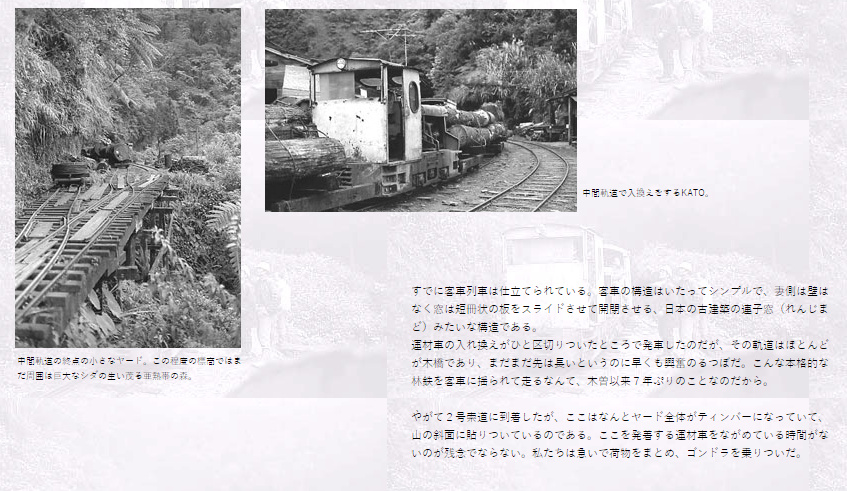 Figure 21: Impressions of the isolated section between ropeway sections 1 and 2. The sections on the mountain often run on trestle bridges, as can be seen in the picture on the left. The vegetation is still (sub-)tropical, but up on the mountain it becomes more moderate to alpine. The Kato locomotives with the typical, rounded windows are also used on the isolated section (source: [web.archive.org]).
 Figure 22: This picture dated from 1984 shows the starting point of the second ropeway section (source: [web.archive.org]).
 Figure 23: This picture from 1985 also shows the starting point of the second ropeway as well as the beginning of the actual main line up on the mountain (source: [web.archive.org])
 Figure 24: Impressions from the main line on the mountain. Mostly it runs either along steep mountain slopes or on trestle bridges. The picture on the right shows the junction of the branch line, which branches off from the main line (source: [web.archive.org]).
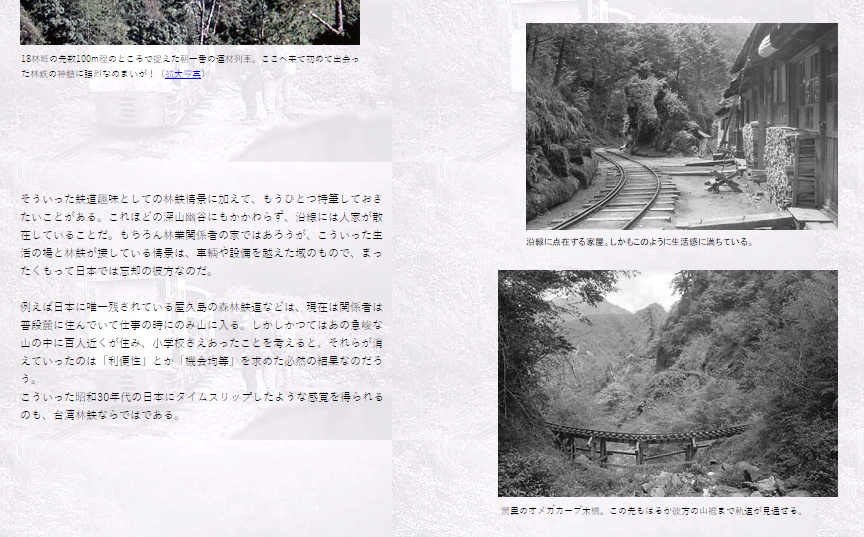 Figure 25: Two more impressions of the main line on the mountain and the workers' camp next to the main line (source: [web.archive.org]).
 Figure 26: This is how logs were transported on the mountain line (source: [web.archive.org]).
Unfortunately, little information is known about the locomotives used on the railway. Since the forest railway initially only connected to the state railway via the Hualien sugar railway, the logs were probably transported by the sugar railway. With the opening of a separate connection to the state railway in Tianpu, American steam locomotives were said to be used. Presumably, like for the Harun Forest Railway, these were former state railway locomotives of the Vulcan class LCK20 used on the line between Hualien and Taitung, which were loaned to the forest railway or later sold. On the mountain line, as with almost all other forest railways in Taiwan, the classic 4.5t small locomotives from Kato were used. Later, the classic 7t Kato small locomotives replaced the steam engines on the valley section.
A Japanese railway enthusiast brought back the following sightings of ten locomotives on the mountain line in 1985:
| No. | Manufacturer | Weigth (t) | Engine | Power | Remark |
| 7 | Kato | 4.5 | Mitsubishi 6DS1 – 134045 | 80 | |
| 9 | Kato | 4.5 | Mitsubishi 6DS1 - 124634 | 80 | |
| 10 | Kato | 4.5 | Mitsubishi 6DS1 – 34012 | 80 | |
| 11 | Tokyu? | 5.0 | Mitsubishi 6DS10L - 43964 | 80 | |
| 12 | Kato | 4.5 | Mitsubishi 6DS1 - 110528 | 80 | |
| 21 | Kato | 4.5 | Mitsubishi 6DS1 - 124046 | 80 | used on the section between ropeway 1 and 2 |
| 22 | Tokyu? | 5.0 | Mitsubishi 6DS10L - 43965 | 80 | |
| 33 | Kato | 4.5 | Mitsubishi 6DS10L - 110524 | 80 | used as a source for spare parts |
| 34 | Kato | 4.5 | Mitsubishi 6DS10L - 110525 | 80 | used as a source for spare parts |
| 35 | Kato | 4.5 | Mitsubishi 6DS10L - 62066 | 80 | used as a source for spare parts |
 Figure 27: This Kato loco was left behind when the Lanshan Forest Railway ceased operations. The warm, humid climate ensures rapid decay and nature reclaims the site. These Kato locos were used on the mountain routes of virtually every forest railway in Taiwan. Thanks to their weight of only around 4t, they could easily be transported up the mountains by ropeways (迪芬達, CC BY-SA 4.0 [creativecommons.org], via Wikimedia Commons).
Since the forest railway was in operation until the late 1980s, there are some photo and video documents from the last few years of operation. They give a great impression of the forest railways in Taiwan (until the mid-1980s, foreigners were not allowed to visit the forest railways; the authorities feared that they would bring communist ideas to the remote mountain regions and their inhabitants). If you are interested, definitely have a look at the following links, there are sometimes breathtaking, sometimes frightening pictures:
- [web.archive.org]: Japanese site with breathtaking yet sometimes frightening operational pictures of the Lanshan Forest Railway from 1985 (a few screenshots are shown in the figures above). Be sure to check it out, the site is a real treasure (don't forget to click the Next button at the bottom right. There are dozens of pages with pictures)!
- [blog.xuite.net]: Lots of pictures from the 1980s of a hiking trip alongside the Lanshan Forest Railway, which was still in operation at the time. A few pictures also show the Lintian Forest Railway and the Taipingshan Railway
- [news.ltn.com.tw]: Although this article from a Taiwanese newspaper focusses on the planned (re)construction of a cable car in the area of the Lanshan Forest Railway, it also shows historical pictures from the operating period of the railway.
- [youtu.be]: Historical film from the operating period of Lanshan Forest Railway on Youtube. Absolutely worth seeing!
In 1930, the Hualien Port Timber Co., Ltd., probably a subsidiary of the Hualien Port Development Co., was founded to exploit the timber deposits in the mountains south-east of Hualien. For this purpose, as in Lintianshan, a 6 km long connecting line was built from the state East Coast Line (Pinghe train station) to the foot of the mountains. A system of five ropeways (total length 4.7 km) and several isolated railway lines connected there. The first ropeway section was almost 1.5 km long and climbed 687 meters. After the war, the railway and forestry operations was taken over by the State Forestry Bureau. This again expanded the route network, the last addition followed in 1964 with the fifth ropeway, the entire network of the forest railway reached a length of 49.51km, the highest point of the network was around 2,400m above sea level! Another source (school project of the primary school in Zhuqiang) gives at least different opening dates for the cable cars:
| No. | Length (m) | Angle | Difference in altitude | Opening date |
| 1 | 1,495 | 27° | 688.33 | November 1948 |
| 2 | 1,311 | 26° | 590.42 | November 1948 |
| 3 | 900 | 20° | 318.87 | November 1948 |
| 4 | 426 | 25° | 185.07 | January 1950 |
| 5 | 575 | 22° | 217.65 | March 1953 |
From 1977 on, the logging dropped sharply and with the re-gauging of the East Coast Line in 1982, operations on the 6 km long valley section were suspended. Nevertheless, the sections on the mountain and the ropeways remained in operation. There are still pictures of the railway operations dated from 1986 (see links below). As in Lanshan, individual areas and sections on top of the mountain were handed over to private companies to exploit the last wood reserves. In 1989, the logging finally ceased. The forest railway of Muguashan was the last forest railway in Taiwan to be in operation (apart from, of course, the Alishan Forest Railway, which by then had not been transporting timber for a long time, but was only operated for tourist traffic, as it is doing today), the commercial logging in Taiwan finally ended in 1991. Most of the tracks on top of the mountains are still in place, but nature has largely reclaimed the area. In the meantime, there were plans to build a modern, tourist cable car, which would partly run along the former routes and cable cars, but there are no plans for the railway lines to be put back into operation.
 Figure 28: The network of the Muguashan Forest Railway in the final stage of expansion. The starting point was the Pinghe State Railway Station on the Taitung/East Coast Line (762mm until 1982). First, a 6 km long section (flat land line) led to the foot of the mountains (the flat land line was shut down in 1982 with the re-gauging of the state railway line). From the valley station, a combination of three ropeways with very short railway sections in between led to the top of the mountain. From there, a more than 25 km long main line runs along the mountain slopes. In between, a short, isolated branch line connected with a ropeway (No. 4). At the end of the main route, a ropeway lead to the other side of the valley, where another route, over 8.5 km long, connected. At the end of this section, another isolated line connected via a tunnel.
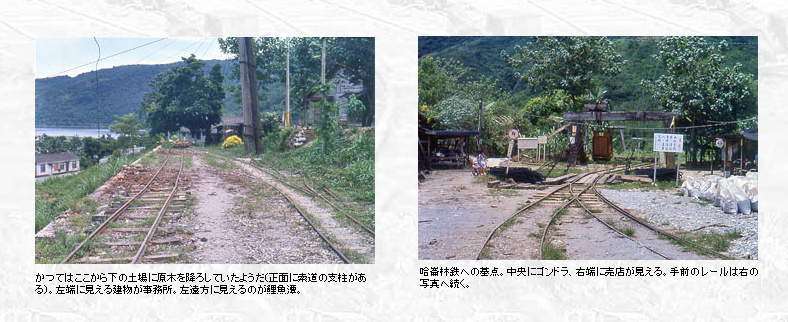 Figure 29: Pictures of the valley station of the Muguashan Forest Railway dating from 1985. The connecting line to the state railway was already closed at that time, the remaining tracks were only used to transport the trunks from the ropeway a few meters to a loading area for trucks. The picture on the left shows this remaining section looking in the direction of the state railway line, the logs were simply thrown down the slope to the left. The picture on the right was basically created after a 180° rotation and shows the valley station of the first ropeway section (source: [web.archive.org]).
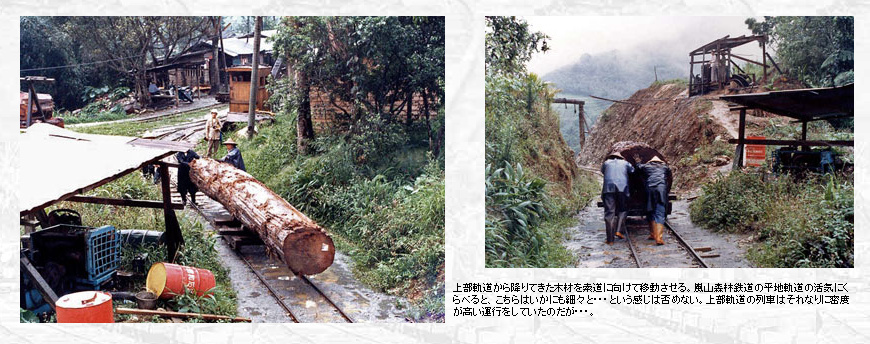 Figure 30: More pictures of the short, then still remaining valley section. The logs were pushed by humans. When the extension to the state railway line still existed, steam locomotives were probably also used there (source: [web.archive.org]).
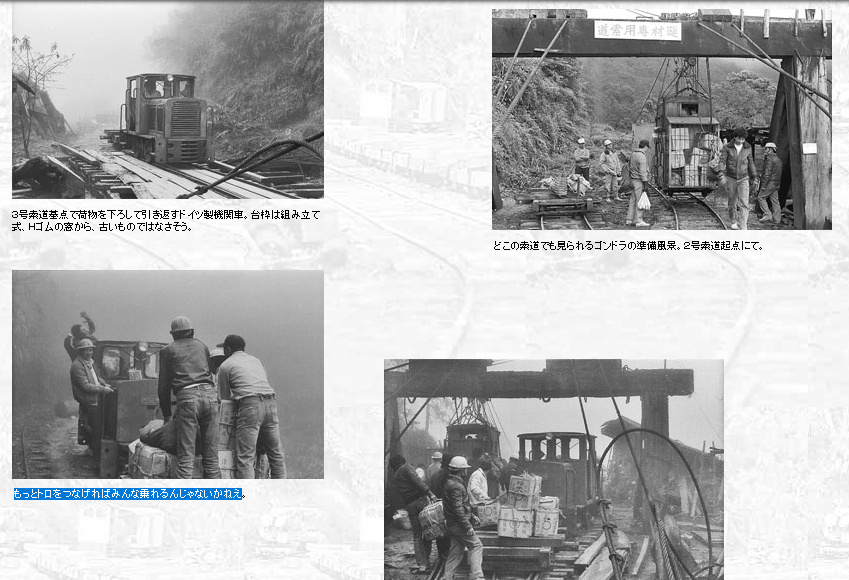 Figure 31: Impressions of the arrival at the mountain station of the second ropeway and the continuation of the journey with ropeway no. 3. In addition to the logs, small gondolas could also be attached to the trolleys of the cable car. There was space for up to eight people with their luggage. In addition, the gondolas were used to supply the workers on the mountains. Sometimes there was even a fixed timetable for the gondolas. The locomotive in the pictures is one of the Schöma locomotives that were used on this forest railway (source: [web.archive.org])
 Figure 32: The main line route on top of the mountain connected to the end of third ropeway section. For the transport of people and goods, there were small wooden wagons that could accommodate up to eight people. The Japanese railway enthusiast writes in his report that the cars were more crowded than in Tokyo's subway at rush hour. The locomotive is one of the Kato locomotives that were probably still used here in the mid-1980s (source: [web.archive.org]).
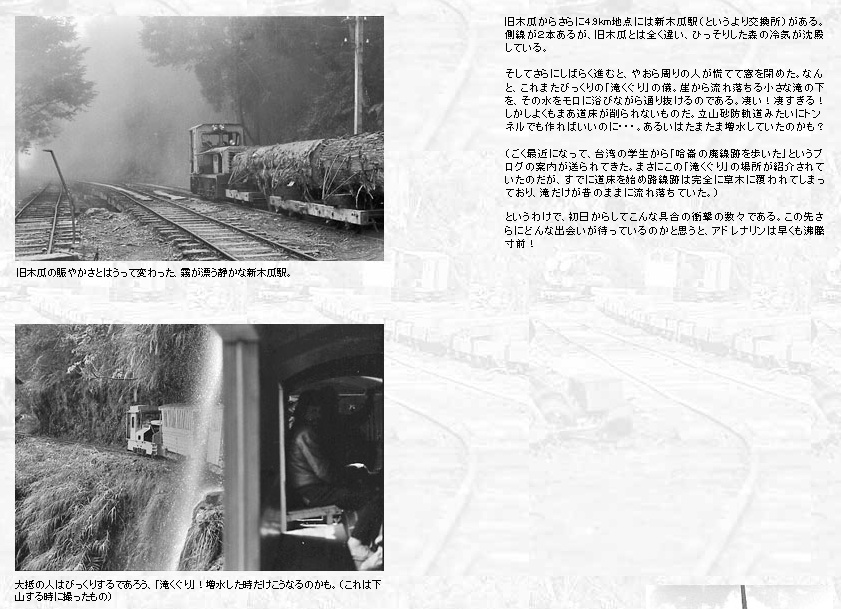 Figure 33: The main lines on the mountains of Taiwan's forest railways operated mostly at an altitude from 1,900m to 2,300m and are therefore usually shrouded in dense fog (source: [web.archive.org]).
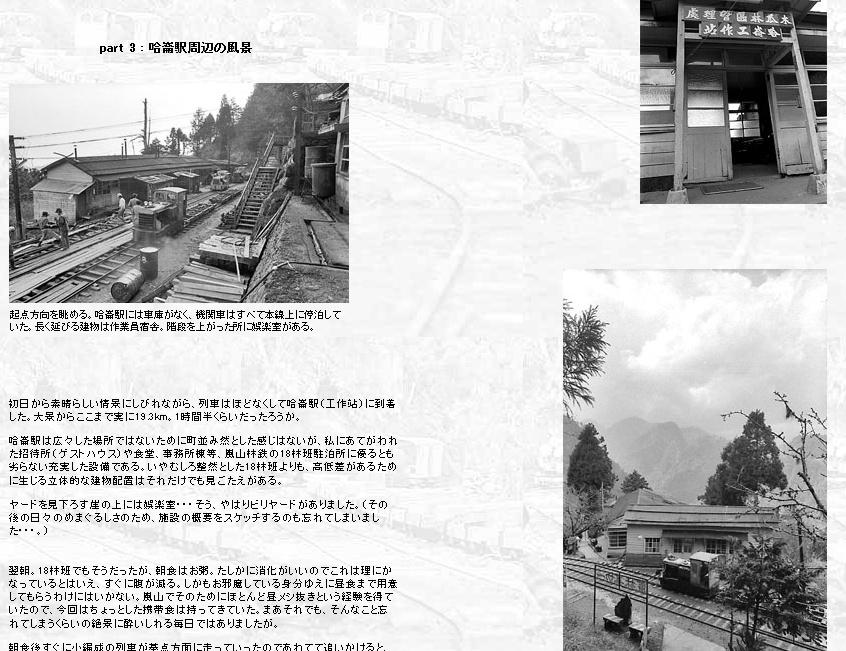 Figure 34: Impressions of the workers' camp alongside the main line. The top left picture shows the workers' dormitories, the bottom right picture shows the dining room (front part) and the office building (back part) (source: [web.archive.org])
 Figure 35: More impressions from the main line on the mountain. The route is extremely spectacular in large parts (source: [web.archive.org])
 Figure 36: Several other isolated lines connected to the main line via ropeways (source: [web.archive.org])
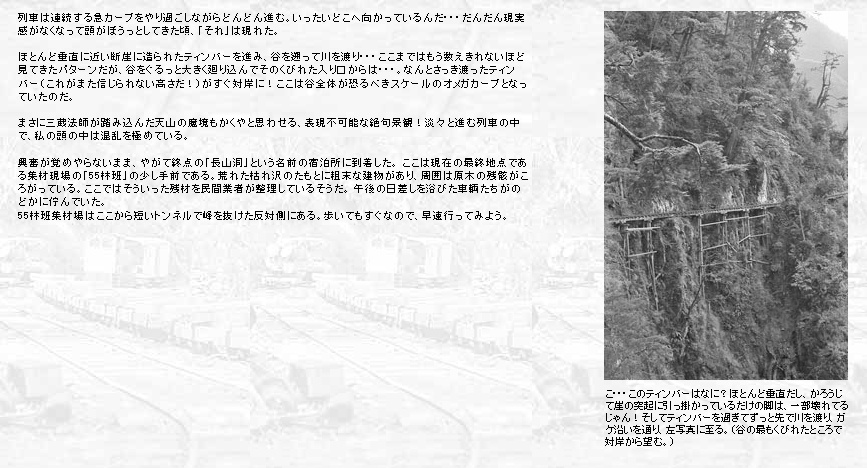 Figure 37: It takes a lot of courage to drive a train over such constructions. Larger accidents are not known from the operation of the forest railways in Taiwan (except Alishan) (source: [web.archive.org])
 Figure 38: Impressions from the end of the top mountain line. Trees were felled here until the railway closed. As you can see, regardless of any losses. The picture on the top right shows snow-covered foothills of the Yushan massif; at almost 4,000m, the Yushan is the highest mountain in Taiwan. Behind the mountain ridge, the Alishan forest railway is located (source: [web.archive.org])
 Figure 39: On his way back from the highest point of the mountain line, the Japanese railway enthusiast witnessed a derailment of a log train that had driven ahead. He was then immediately sent back towards the valley, allegedly because a typhoon that was about to arrive causing severe landslides (source: [web.archive.org])
 Figure 40: The State Forestry Bureau has also published a book in Chinese with historical pictures of the forest railway in 2016. In case anyone is interested, the book's ISBN is 9789860489385.
The area around Muguashan has become a popular recreation area. A park has been laid out in Chihnan with reminiscents of the forest railways. There, you can find a Nippon Sharyo steam engine that is believed to have once operated on the Luodong Forest Railway as well as the former Shay-Lok No. 16 of Alishan Forest Railway. For some time in the past, a small railway was set up on a small circuit, mainly for children, and the carriages were pulled by one of the Schöma locomotives that formerly operated on the Muguashan Forest Railway. However, operations were discontinued a few years ago and everything seems to be rotting away now.
Since the forest railway was in operation until the late 1980s, there are some photo and video documents from the last few years of operation. They give a great impression of the forest railways in Taiwan (until the mid-1980s, foreigners were not allowed to visit the forest railways; the authorities feared that they would bring communist ideas to the remote mountain regions and their inhabitants). If you are interested, definitely have a look at the following links, there are sometimes breathtaking, sometimes frightening pictures:
- [web.archive.org]: Japanese site with breathtaking and sometimes frightening operational pictures of the Harun Forest Railway from 1986 (I already showed a few screenshots above). Be sure to check it out, the site is a real treasure (don't forget to click the Next button at the bottom right. There are dozens of pages with pictures)!
- [web.archive.org]: Taiwanese page about the book described above. It also shows some, sometimes breathtaking, operational photos from the forest railway which are included in the book.
- [youtu.be]: A film by the state forest agency probably from 1974. The quality isn't particularly good, the editing and the music take some getting used to, but it's still absolutely worth watching it.
- [youtu.be]: Another Taiwanese film about the forest railway.
section under construction